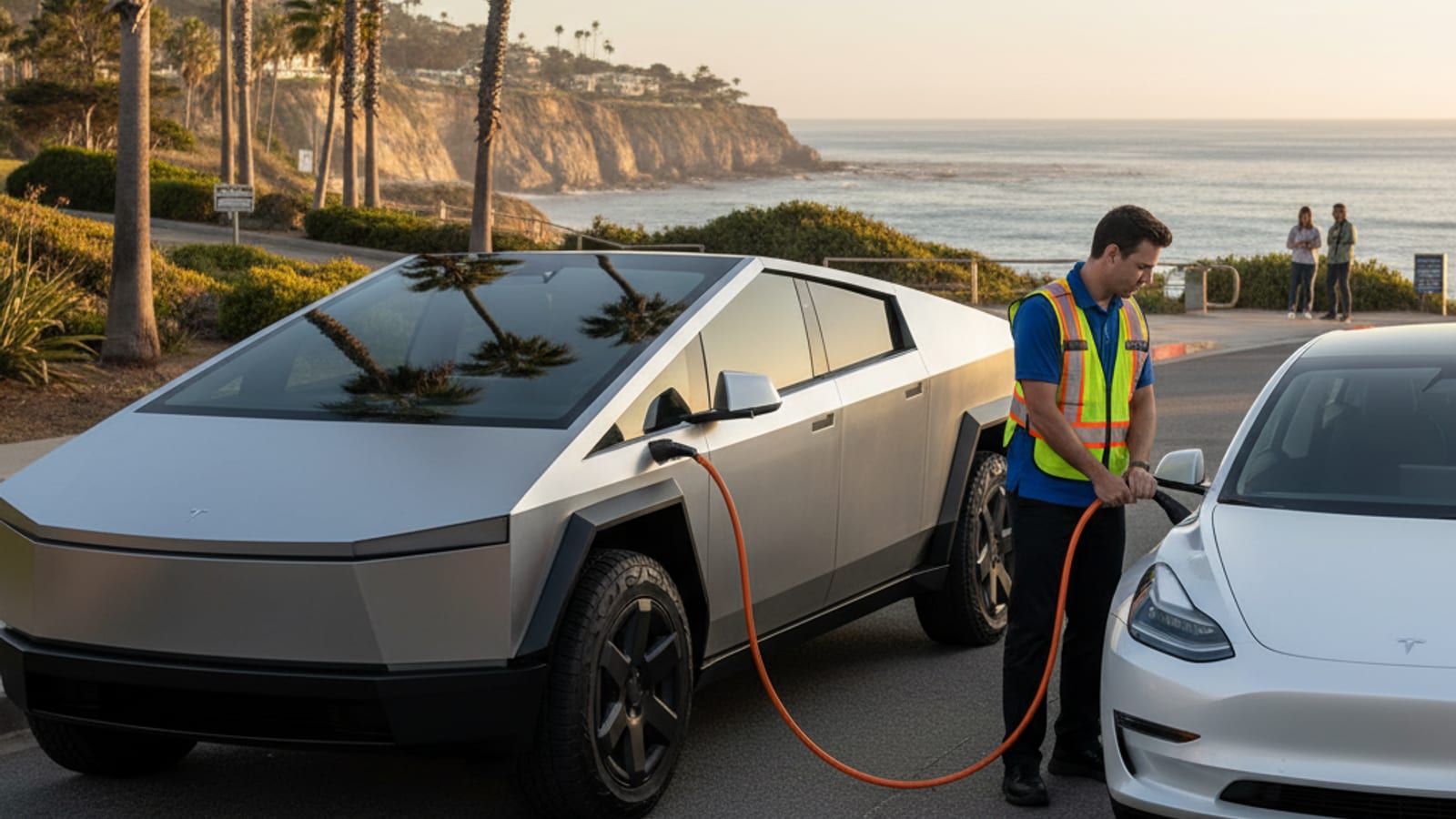
A Manhattan Beach driver who misjudges the climb up to the Hill Section or runs the Sand Section down to zero doesn’t get a charger at the next block. They get a curb on a narrow beach street. That’s when mobile EV charging in Manhattan Beach matters. A local operator brings 240-volt Level 2 to where the car sits.
Manhattan Beach is small and hilly
The city sits on less than two square miles between the Pacific and the 405. The Sand Section is flat. The Tree Section sits a little above. The Hill Section climbs hard from Valley Drive up toward Ardmore and Larsson. The grade on those streets pulls more range than the dash suggests.
The 405 approach from inland runs right through Manhattan Beach on Rosecrans and Sepulveda. A driver who came down from a 95F day in the basin arrives with the pack lower than the morning dash showed. The climb up to the Hill Section finishes whatever buffer was left.
Census ACS data puts 60.0 percent of Manhattan Beach housing built before 1980. Older homes in the Hill Section sit on short driveways. Newer builds have garages with chargers, but many older ones don’t. The panel era matters for a home charger circuit. Mobile EV charging covers the dispatch when the home circuit isn’t there yet.
What the operator brings
We’re a referral line for Los Angeles County. We match stranded EV drivers with independent local operators. The pros we connect you with are licensed and insured. We hold no license for the work. We own no trucks and employ no technicians. We set no prices and publish no arrival time.
The operator quotes you before they start. They bill you directly. No dollar figure belongs here. They quote you on the phone and confirm access before they roll.
What they bring is a 240-volt Level 2 source to the car. Teslas take a native NACS plug. Other EVs use a CCS or J1772 adapter. A typical session adds 10 to 20 miles of range. Charging time is usually 15 to 30 minutes, and that clock starts when the plug is in. It isn’t a clock for when the truck shows up.
That boost is enough to clear the Hill Section climb and reach a charger on Rosecrans or in El Segundo. Operators also jump or replace a dead 12-volt battery on site.
Beach lots and dead 12V
Manhattan Beach lots along the Strand and around the pier fill on summer weekends. A driver who parks at 10 AM and returns at 6 PM finds the screen dark and the handles locked. The traction pack still has range. The 12V quit during the sit.
The marine layer holds summer heat down. That helps the 12V last longer than it would inland. It doesn’t help when the car sat through a long beach day with accessory drain. A car that sat through dinner and the sunset often needs a 12V jump at the stall.
Mobile EV charging in Redondo Beach covers the same pattern one city south. The operator network is the same.
Two different dead cars, two different calls
The empty-pack version shows up after a long day at the beach or a missed charge on Rosecrans. The driver sees the dash dropping, finds a curb in the Sand Section, and calls for a charge. The traction pack is at zero, but the 12V still works. The operator plugs in and adds 10 to 20 miles.
The 12V version shows up after a long sit at the beach. The car won’t unlock. The screen is dark. The operator jumps the 12V at the lot or replaces it on site. The traction pack still has whatever range it had before the car parked.
Both versions happen on a regular basis in this beach grid. The dispatch is the same call.
Stay safe on a beach street
Manhattan Beach streets are narrow. Sand Section alleys between the ocean and the lots barely fit a tow truck. The operator’s van needs a place to pull up. If you’re on a tight street, find a legal spot and set hazards. Stay with the car.
Don’t leave a dead EV on a red curb in Manhattan Beach. Parking enforcement runs the same as any beach city. A dead EV in a green-striped space or a metered spot with time still on it is fine for a 30-minute session.
AAA versus a mobile operator on a beach call
AAA covers tows and lockouts. An EV that needs electrons, not a flatbed, doesn’t get that from a tow truck. The mobile operator brings the charger to the car.
AAA or a mobile charge: what actually gets an empty EV moving covers the side-by-side. On a beach call, the answer leans toward the operator. The car doesn’t need to move. It needs power at the curb.
When a tow is still the honest answer
A crash or a bent wheel still needs a shop. So does a charge port that won’t accept power. On-site charging can’t fix that. If CHP is already there, take the safe tow.
City of Los Angeles impound rules apply to cars towed from Manhattan Beach streets. The Manhattan Beach Police Department handles releases. Release steps weren’t confirmed for this page. Check the MBPD website before you assume a process.
The number to call is (213) 410-1991. We’ll match you with a local operator. They quote before any cable goes in.