A Tesla Model 3 pack replacement is rare and expensive. Most Model 3 owners will never need one. The pack is designed to outlast the rest of the car. For the small number of owners who do need a pack replacement, here’s what to ask before you take it to a shop in LA County.
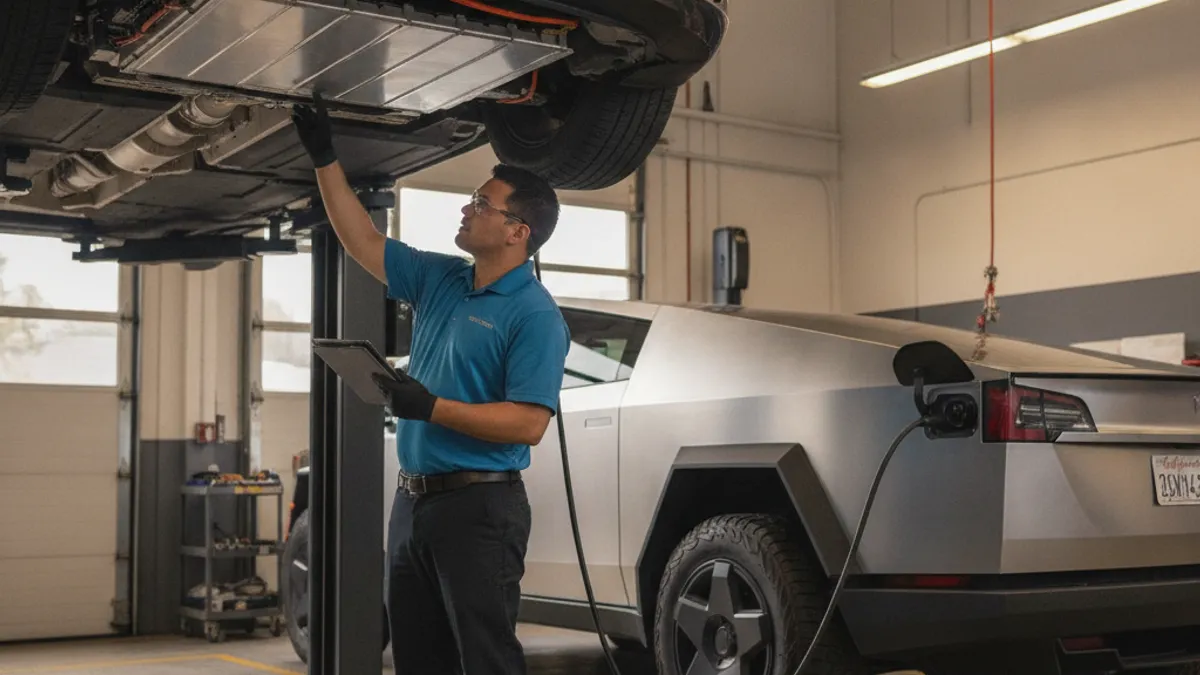
How rare is a Model 3 pack replacement
Tesla warranties the Model 3 traction pack for 8 years or 100,000 to 150,000 miles depending on the trim. Most Model 3 packs make it through the warranty period without needing replacement. The Model 3 Standard Range Plus uses an LFP pack in some markets, which has a different degradation profile than the NCA pack in the Long Range and Performance.
Outside the warranty period, pack replacement is sometimes needed for cars with high mileage or for cars with a manufacturing defect. Tesla Service Centers handle the replacement. The work is done at the service center, not on site.
What owners ask first
The first question is whether the pack is actually failing or whether the symptoms point to something else. A Model 3 with reduced range may have a 12V issue, a software calibration issue, or a tire pressure issue. None of those need a pack replacement.
The second question is whether the failure is covered under warranty. A Model 3 within the 8-year or 100,000 to 150,000-mile pack warranty may get a free replacement if the pack has lost more than 30 percent of its capacity or if it has a manufacturing defect.
The third question is what the cost is for an out-of-warranty replacement. Tesla Service Centers quote on a case-by-case basis. The number varies by trim and by year. Independent shops that handle EV pack replacements also quote on a case-by-case basis.
The fourth question is whether a refurbished pack is an option. Some independent shops offer refurbished packs at a lower cost than new. The warranty on a refurbished pack varies.
What the symptoms look like
A Model 3 with a failing traction pack shows several symptoms. The range drops faster than expected. The dash reads lower than the actual miles. The car throws a high-voltage warning. The car refuses to charge above a certain percentage.
A driver who sees these symptoms should take the car to a Tesla Service Center. The center runs diagnostics on the pack and confirms whether replacement is needed.
The diagnostics check individual cell voltages, the pack’s internal resistance, and the battery management system’s logs. The center reads out the pack’s state of health. The number tells the center whether the pack is at end of life or whether something else is wrong.
What roadside can and can’t do
A roadside operator can’t replace a traction pack. The work requires a lift, specialized tools, and high-voltage safety training. The work happens at a service center or an independent EV shop, not at the curb.
A roadside operator can charge the car if the pack is low. They bring 240V Level 2 to the car. They add 10 to 20 miles. That gets the driver to a service center for the diagnostic.
A roadside operator can jump the 12V if that’s the actual problem. They bring a portable jump pack to the front of the car.
The operator confirms on the call whether their help fits the symptoms. If the symptoms point to a pack issue, the operator recommends a tow to a service center.
The 12V version of the symptoms
A Model 3 with a dead 12V can look like a Model 3 with a pack issue. The dash stays dark. The car won’t wake. The app shows the car as offline.
The fix is a 12V jump. The pack is fine. The 12V is the problem.
Tesla 12V is dead: how to tell, then how to jump it covers the diagnosis in more detail.
What owners ask second
The next question after the diagnostic is whether to go to a Tesla Service Center or to an independent shop. Tesla Service Centers use genuine Tesla parts and have the latest diagnostic equipment. Independent shops may offer refurbished packs at a lower cost.
The choice depends on the car’s age, the warranty status, and the owner’s budget. A Model 3 still under pack warranty should go to a Tesla Service Center. A Model 3 out of warranty can go to either.
What the operator quotes
We’re a referral line for Los Angeles County. We match stranded EV drivers with independent local operators. The pros we connect you with are licensed and insured. We hold no license for the work. We own no trucks and employ no technicians. We set no prices and publish no arrival time.
The operator quotes you before they start. They bill you directly. No dollar figure belongs here. They quote you on the phone and confirm access before they roll.
For a Model 3 that won’t drive because of a pack issue, the operator recommends a tow to a service center. For a Model 3 with a dead 12V, the operator brings a jump pack.
The combined answer
A Tesla Model 3 pack replacement is rare and expensive. Most owners will never need one. A driver who sees pack symptoms should take the car to a Tesla Service Center for diagnostics. The center confirms whether the pack is at end of life or whether something else is wrong. A roadside operator can charge the car or jump the 12V to get it to the service center.
The number to call is (213) 410-1991. We’ll match you with a local operator. They quote before any cable goes in.