A Tesla driver in LA County who pulls into a Supercharger site and finds every stall full or down has a real problem. The pack is low. The next charger is miles away. The driver needs electrons, not a wait. Here’s the path through the situation including the mobile rescue option.
When every stall is full
A Supercharger site in a busy part of LA County fills up on weekends and on summer afternoons. The Del Amo site, the Hawthorne site, the Burbank site, and the Culver City site all see regular full-stall periods.
A driver who arrives at a full site has options. Drive to another Supercharger site. Check the Tesla app for nearby sites with available stalls. The app shows real-time stall availability.
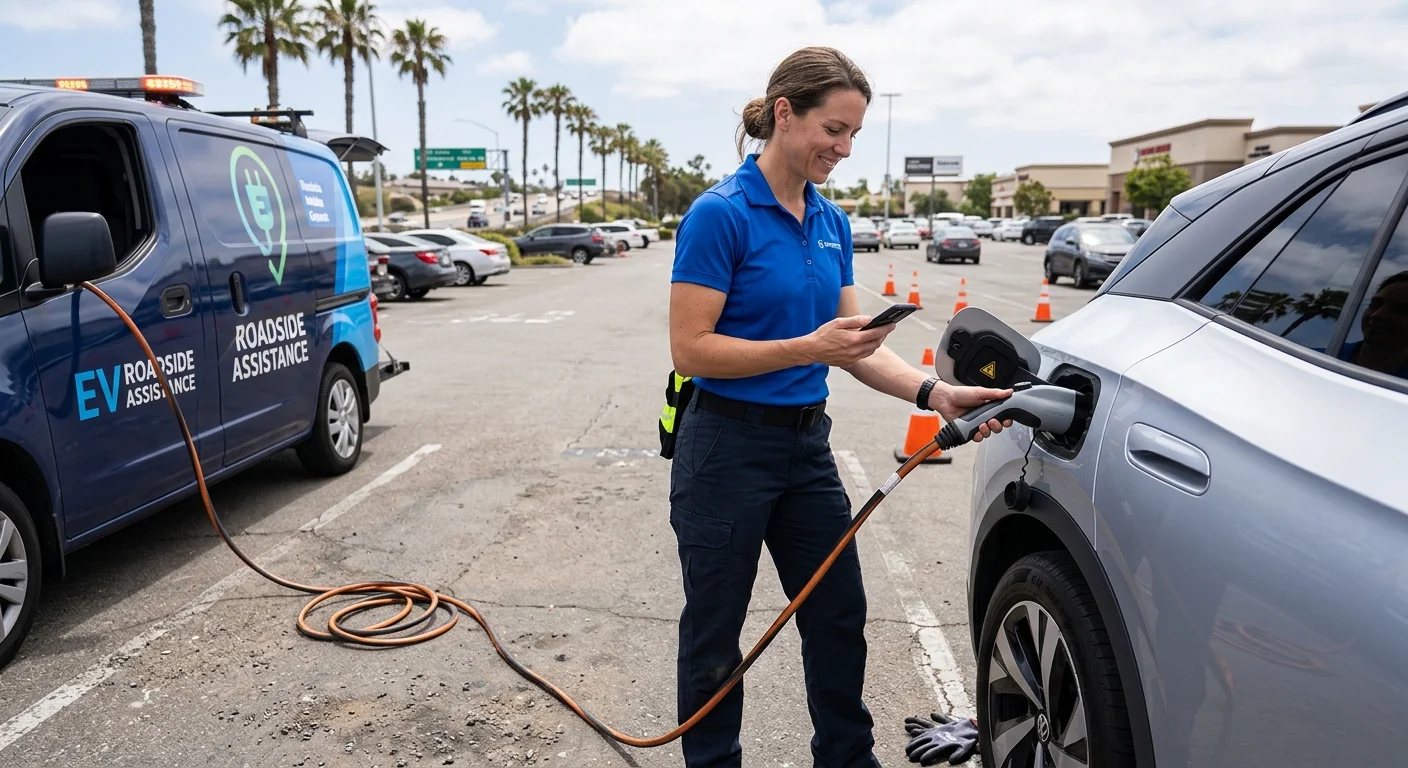
A driver who can’t reach another site in the remaining range needs a mobile charge. The driver calls a mobile operator. The operator brings 240V Level 2 to the car. The driver gets 10 to 20 miles to reach a working site.
When the site is down
A Supercharger site can be down because of a network outage, a power outage, or equipment failure. The Tesla app shows the site as unavailable when it’s down.
A driver who arrives at a down site has options. Drive to another Supercharger site. Check the Tesla app for nearby working sites. The app shows real-time site status.
A driver who can’t reach another site needs a mobile charge. The operator brings 240V Level 2 to the car.
When one stall is down
A Supercharger site can have one or two stalls down while the rest work. The driver can use a working stall. The driver should report the down stall through the Tesla app. Tesla’s network operations team needs the report to dispatch a repair.
A driver who arrives at a site with every stall down needs another site or a mobile charge.
When the car won’t charge
A driver who plugs in and the session doesn’t start has a different problem. The handshake failed. The fix is on the driver side: reseat the cable, check the connector, try a different stall.
Public charger says connected but it’s not charging covers the troubleshooting in more detail.
A driver who can’t get any stall to work at a site needs another site or a mobile charge.
What the operator brings
We’re a referral line for Los Angeles County. We match stranded EV drivers with independent local operators. The pros we connect you with are licensed and insured. We hold no license for the work. We own no trucks and employ no technicians. We set no prices and publish no arrival time.
The operator quotes you before they start. They bill you directly. No dollar figure belongs here. They quote you on the phone and confirm access before they roll.
What they bring is a 240-volt Level 2 source to the car. Teslas take a native NACS plug. A typical session adds 10 to 20 miles of range. Charging time is usually 15 to 30 minutes, and that clock starts when the plug is in. It isn’t a clock for when the truck shows up.
How the dispatch works
The operator matches your pin to an operator already covering that part of LA County. The Westside gets a Westside operator. The Valley gets a Valley operator. The South Bay gets a South Bay operator.
The operator’s arrival time depends on where they already are when you call. We don’t publish an arrival time. The operator quotes you before they roll and gives you a window on the call.
Stay safe while you wait
Pull as far right as you can in the Supercharger lot and set hazards. Don’t block the working stalls. Stay with the car if you can.
Don’t leave a dead Tesla in a Supercharger lot overnight. The lot operator can tow the car under CVC 22658. Call while you can stay with it.
What to do with the broken Supercharger
Report the broken stall or the down site through the Tesla app. Tesla’s network operations team needs the report to dispatch a repair. Your report helps the next driver who pulls up.
If the down site is the only one in the area, the network may have an outage map. Check the app for nearby working sites before you drive.
How to avoid the situation
Plan trips around the Supercharger network. The Tesla app shows real-time availability. A driver who checks the app before leaving can avoid a full site.
Charge before you reach 20 percent on the freeway. The buffer gives the driver options when a site is full or down.
The Tesla’s navigation system biases toward chargers when the pack is below 50 percent. Trust the navigation. Don’t override it for a faster route that runs through a charger gap.
The combined answer
A Supercharger that’s full or down leaves a driver stuck. The driver should check the Tesla app for nearby working sites. If the driver can’t reach another site, a mobile operator brings 240V Level 2 to the car. The driver gets 10 to 20 miles to reach a charger.
The number to call is (213) 410-1991. We’ll match you with a local operator. They quote before any cable goes in.