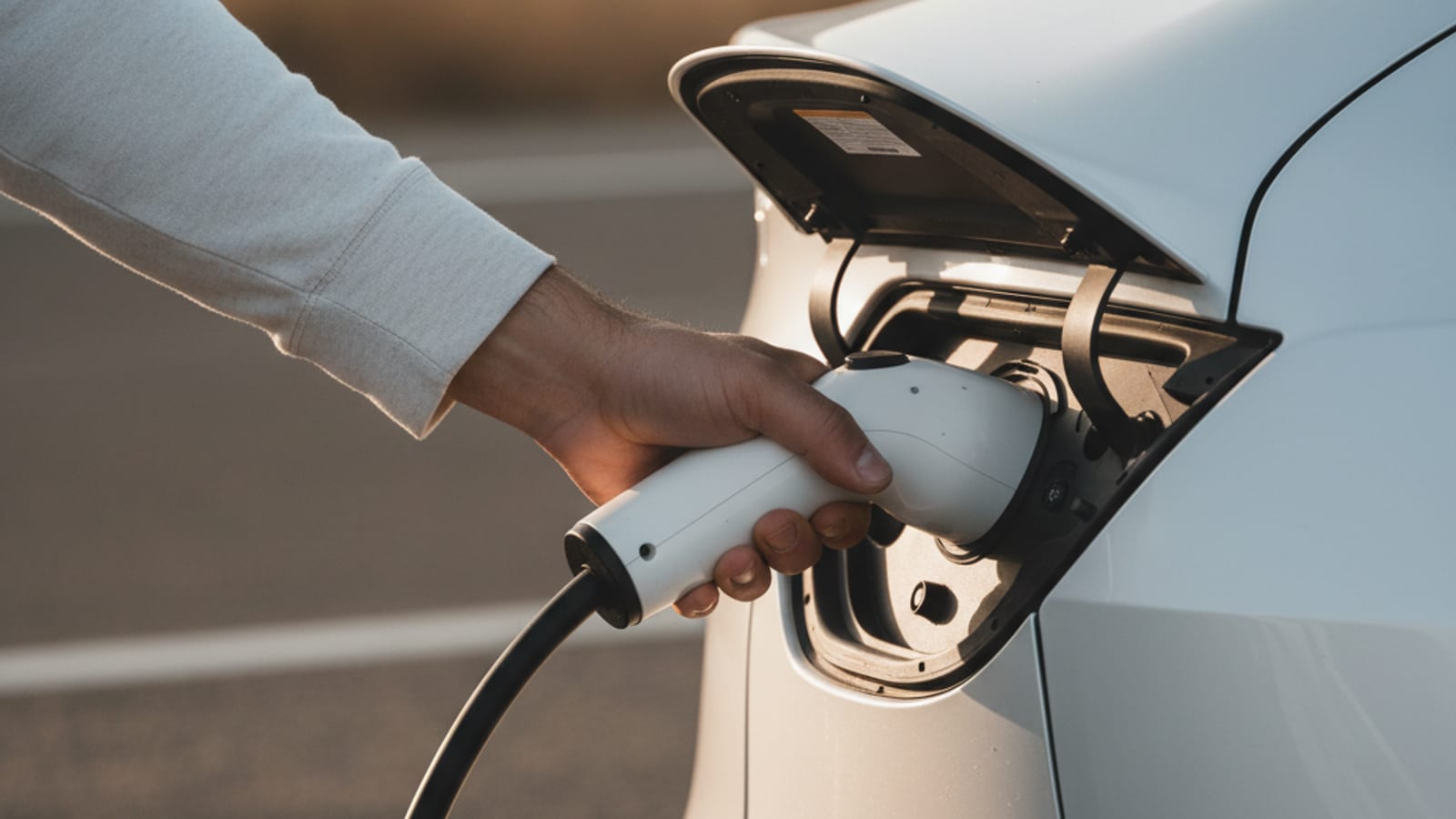
An EV charge port can hold water after rain, a car wash, or a deep puddle. Plugging in with water in the port can cause a fault or a charger handshake failure. Here’s what to do before you plug in and when to call for help in LA County.
Why water in the port is a problem
The charge port has pins that carry data and power. The pins connect to the charger’s connector when the plug is in. Water on the pins can cause a short or a handshake failure.
Most modern EVs have weatherproof charge ports. The port seals against water intrusion during normal rain and car washes. The seal isn’t perfect. Deep puddles, pressurized car washes, and broken seals let water into the port.
Water in the port doesn’t damage the car. It causes a charging failure. The fix is to dry the port before plugging in.
How to dry the port
Open the charge port door. Look inside the port. Look for water droplets on the pins and on the port walls.
Use a dry cloth to wipe the inside of the port. A microfiber cloth works well. Don’t use paper towels, which can leave fibers.
Use compressed air if you have it. A few short bursts clear the water from the pins. Don’t use high-pressure air, which can push water into the seal.
Let the port air dry for a few minutes. The water evaporates. The port is ready to use.
When to call for help
A driver who has dried the port and still can’t charge has a different problem. The handshake may be failing for another reason. The fix is on the driver side: reseat the cable, try a different stall, authorize the session through the app.
Public charger says connected but it’s not charging covers the troubleshooting path before the rescue call.
A driver who can’t charge on multiple networks may have a car-side problem. The charge port may be physically damaged. The fix is a tow to a dealer.
When the port is broken
A broken charge port seal lets water in. The seal may be torn or missing. A driver with a broken seal should get it replaced at a dealer before the next rain.
A broken port can also fail the charging handshake even when dry. The pins may be bent or corroded. A dealer can diagnose and replace the port.
A driver with a broken port gets a tow to a dealer. On-site charging can’t fix a broken port.
What about the J1772 and NACS
The J1772 connector used on most non-Tesla EVs and the NACS connector used on Teslas both have weatherproof designs. The seal isn’t perfect in either case. Deep puddles and high-pressure water can breach the seal.
The fix is the same. Dry the port before plugging in. Wait for the seal to recover.
What about CHAdeMO
CHAdeMO is a different connector used on the Nissan Leaf and some older EVs. CHAdeMO connectors have their own weatherproofing. The same rules apply: dry the port before plugging in.
CHAdeMO is being phased out of new EVs in favor of CCS and NACS. A Leaf driver with a CHAdeMO port follows the same drying procedure.
What the operator brings
We’re a referral line for Los Angeles County. We match stranded EV drivers with independent local operators. The pros we connect you with are licensed and insured. We hold no license for the work. We own no trucks and employ no technicians. We set no prices and publish no arrival time.
The operator quotes you before they start. They bill you directly. No dollar figure belongs here. They quote you on the phone and confirm access before they roll.
What they bring is a 240-volt Level 2 source to the car. The operator’s equipment is independent of the public network. If the public charger fails because of water, the operator’s truck isn’t affected.
Why this happens in LA County
LA County has mild winters. Most rain comes in the winter months. A driver who parks outside during a storm may find water in the port the next morning.
The marine layer carries moisture in the summer. Condensation can form inside the port when warm humid air meets a cooler port. The condensation looks like water on the pins.
A driver who notices the condensation should dry the port before plugging in. The fix is fast.
How to avoid the situation
Park in a garage when possible. A garage keeps the car dry during rain and reduces condensation during the marine layer.
Don’t drive through deep puddles. Deep puddles can breach the port seal.
Don’t use high-pressure car washes. High-pressure water can breach the port seal.
Confirm the charge port door is closed after charging. A door that doesn’t close fully lets water in.
The combined answer
An EV charge port can hold water after rain, a car wash, or a deep puddle. The fix is to dry the port before plugging in. A driver who can’t charge after drying the port has a different problem. A mobile operator brings 240V Level 2 to the car if needed.
The number to call is (213) 410-1991. We’ll match you with a local operator. They quote before any cable goes in.