Rivian R1T and R1S use CCS for DC fast charging and J1772 for Level 2 charging. The connector matches most North American non-Tesla EVs. Here’s how that maps to mobile rescue in LA County when a Rivian is stranded.
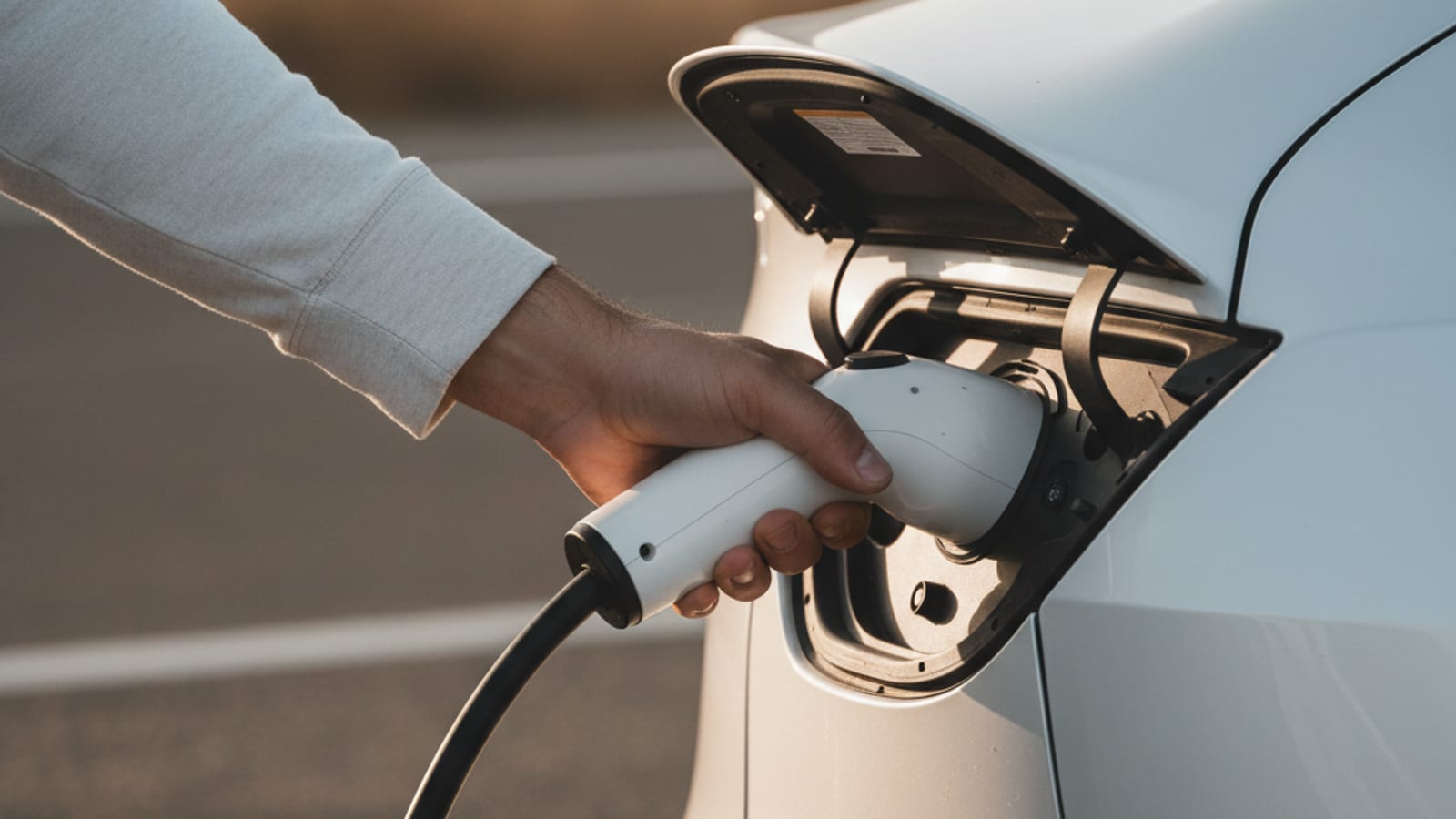
What the Rivian charge port looks like
The Rivian R1T and R1S use a single CCS charge port on the rear driver’s side of the vehicle. The port has two sections. The upper section is the J1772 connector for Level 2 AC charging. The lower section has two additional pins for CCS DC fast charging.
A Level 2 charger uses the upper J1772 connector. A DC fast charger uses both the upper and lower sections in a combined CCS plug. The driver plugs in once and the charger handles the rest.
The Rivian doesn’t use NACS natively. R1T and R1S built before the 2025 NACS adoption need a CCS adapter to use Tesla Superchargers. Newer Rivian trucks and SUVs have native NACS ports.
What a mobile operator brings
We’re a referral line for Los Angeles County. We match stranded EV drivers with independent local operators. The pros we connect you with are licensed and insured. We hold no license for the work. We own no trucks and employ no technicians. We set no prices and publish no arrival time.
The operator quotes you before they start. They bill you directly. No dollar figure belongs here. They quote you on the phone and confirm access before they roll.
For a Rivian, the operator brings a 240-volt Level 2 source with a J1772 connector. They plug in at the stall. The Rivian accepts the charge. A typical session adds 10 to 20 miles of range.
The operator’s van also carries a NACS-to-CCS adapter for newer Rivians with native NACS ports. The adapter covers both connector types in one truck.
What about CCS DC fast charging
A Rivian that needs a fast charge on the road uses CCS at stations like Electrify America, EVgo, and ChargePoint. The handshake is the same as for any other CCS-equipped EV.
A driver who can’t reach a CCS station because the pack is low gets a mobile charge from an operator. The operator brings Level 2 to the car. The driver gets 10 to 20 miles. The driver drives to the nearest CCS station.
A driver who can reach a CCS station plugs in and waits. DC fast charging adds 100 to 200 miles in 30 minutes depending on the station and the pack state.
What about Tesla Superchargers
A Rivian built before the NACS adoption can use Tesla Superchargers with a CCS-to-NACS adapter. The adapter is sold by Rivian as an accessory. The driver plugs the adapter into the Rivian’s CCS port, then plugs the Tesla cable into the adapter.
A Rivian built after the NACS adoption has a native NACS port and plugs directly into Tesla Superchargers without an adapter. The Magic Dock at some Supercharger sites also supports CCS natively.
A driver at a Tesla Supercharger with an adapter-equipped Rivian plugs in and the session starts through the Tesla app. The session bills through the Tesla account.
Rivian charge port stuck: how to free the cable on R1T and R1S covers what to do when the cable won’t release.
Why the connector matters for roadside
The operator’s van carries the connectors the cars need. A Rivian in LA County needs J1772 for Level 2 and CCS for DC fast. The operator’s van carries both. A driver who calls us gets an operator with the right cable.
A driver who calls the wrong dispatch may get a contractor without the right cable. The driver should describe the car and the connector when calling. The description helps the contractor bring the right equipment.
LA County stations that work for Rivian
Electrify America stations work for CCS-equipped Rivians. EVgo stations work for CCS-equipped Rivians. ChargePoint stations work for CCS-equipped Rivians. Tesla Superchargers work for NACS-equipped Rivians or CCS-equipped Rivians with an adapter.
The Rivian’s own Adventure Network stations are scattered across the country. LA County doesn’t have many Adventure Network stations yet. Rivian drivers rely on the broader CCS and NACS networks.
What about home charging
A Rivian owner with a home Level 2 charger doesn’t need mobile rescue as often. The home charger covers the daily commute and the overnight top-up. Mobile rescue fills the gap when the home charger fails or when the driver is away from home.
Home EV charger install vs mobile rescue in LA covers the home charger decision in more detail.
The combined answer
Rivian uses CCS for DC fast and J1772 for Level 2. A mobile operator brings a J1772 cable to the car and adds 10 to 20 miles. The driver drives to a CCS station or a home charger. A driver with a NACS-equipped Rivian uses the operator’s adapter.
The number to call is (213) 410-1991. We’ll match you with a local operator. They quote before any cable goes in.