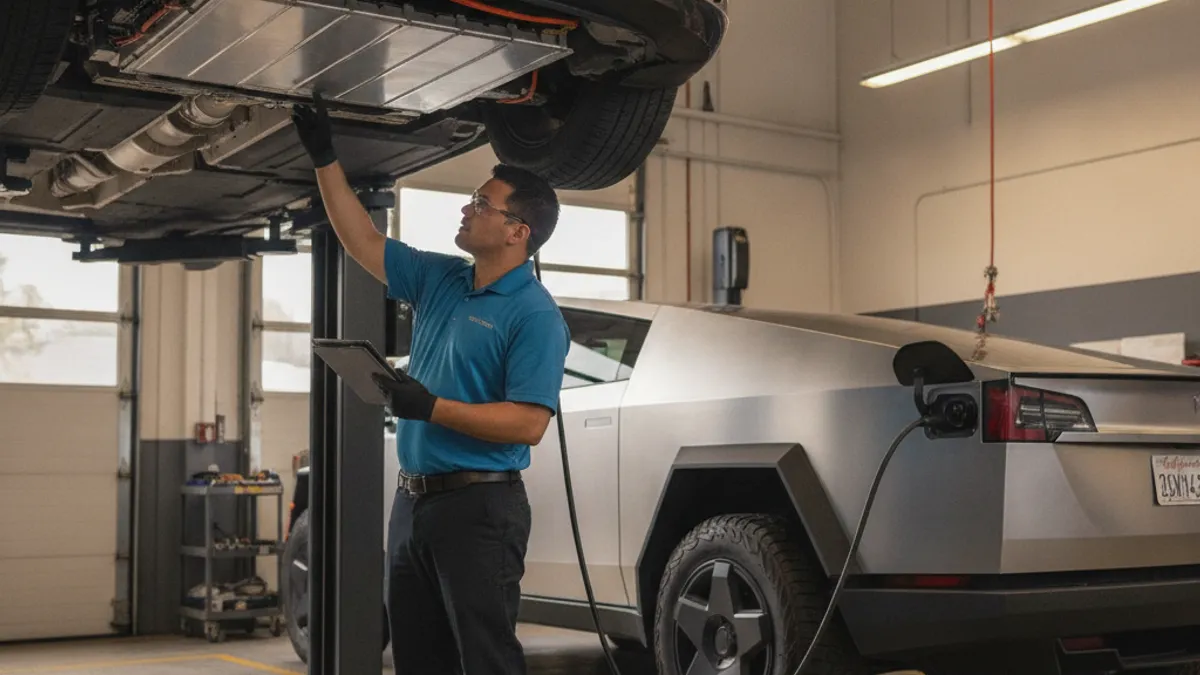
Tesla’s battery warranty covers the traction pack for 8 years or 100,000 to 150,000 miles. The coverage includes manufacturing defects and excessive capacity loss. The coverage doesn’t include the 12V battery, tires, or accident damage. Here’s the breakdown for LA County owners.
What the warranty covers
Tesla’s traction pack warranty covers manufacturing defects in the pack. A pack with a defective cell, a defective module, or a defective BMS is covered. The Tesla Service Center replaces the pack or the defective component.
The warranty also covers excessive capacity loss. Tesla defines excessive capacity loss as more than 30 percent of the original capacity within the warranty period. A pack that drops below 70 percent of its original capacity during the warranty period is eligible for replacement.
The mileage limit varies by model. The Model 3 Standard Range and Model Y Standard Range have a 100,000-mile limit. The Model 3 Long Range, Model Y Long Range, Model S, and Model X have a 120,000-mile limit. The Cybertruck has a 150,000-mile limit in some configurations.
What the warranty doesn’t cover
The traction pack warranty doesn’t cover the 12V battery. The 12V is a separate component with its own service interval. A driver who replaces the 12V pays for the battery and the install labor.
The warranty doesn’t cover tire wear. Tires are wear items and are replaced on the owner’s schedule.
The warranty doesn’t cover accident damage. A driver in a crash that damages the pack pays for the repair out of pocket or through insurance.
The warranty doesn’t cover damage from modifications. A driver who installs an aftermarket battery management system or who tampers with the pack’s wiring voids the warranty.
The warranty doesn’t cover damage from off-road use that exceeds the vehicle’s design limits. The Cybertruck has specific off-road use language in its warranty.
What about the 8-year clock
The 8-year clock starts on the first delivery date. The clock doesn’t reset when the car is sold to a new owner. A used Tesla still has the remaining warranty from the original delivery date.
A driver who buys a used Tesla should check the remaining warranty. The Tesla app shows the warranty status. The Service Center can confirm the remaining time and mileage.
What about the 12V under warranty
The 12V battery has its own warranty. The 12V warranty covers defects in the battery for a shorter period than the traction pack warranty. The exact term varies by model year and battery type.
A driver who sees a 12V warning in the Tesla app should schedule a replacement at a Service Center. The replacement may be covered under the 12V warranty if the battery is defective. A driver with a worn 12V at end of life pays for the replacement.
Tesla 12V battery replacement: what owners should know before a shop visit covers the replacement process.
What about capacity loss claims
A driver who believes their pack has lost excessive capacity should take the car to a Tesla Service Center. The center runs diagnostics on the pack. The diagnostics check individual cell voltages, the pack’s internal resistance, and the battery management system’s logs.
The center reports the pack’s state of health. The number tells the center whether the pack is at end of life or whether something else is wrong. A pack below 70 percent of its original capacity during the warranty period is eligible for replacement.
A driver whose pack is below 70 percent should not assume a free replacement. The center runs the diagnostics first. The center confirms the pack meets the warranty threshold before approving a replacement.
What the warranty doesn’t do
The warranty doesn’t extend the car’s life. A pack that fails outside the warranty period is the owner’s expense. A pack replacement outside warranty runs into five figures at a Tesla Service Center.
The warranty doesn’t cover consequential damage. A driver whose pack fails and strands them on the side of the road may have tows and lodging expenses that aren’t covered.
The warranty doesn’t cover a pack that’s been modified. Aftermarket batteries, third-party BMS systems, and unauthorized repairs void the warranty.
What about roadside assistance and the warranty
Tesla’s basic roadside covers tows to a Service Center for a fault. The tow is covered under the basic program if the fault is mechanical. The tow may not be covered if the fault is the result of an accident or modification.
A driver with a warranty issue gets a tow to a Service Center. The center confirms the warranty covers the repair. The driver leaves with the car fixed.
A driver with a roadside issue that’s not a warranty claim pays out of pocket for the tow. The tow isn’t covered.
Tesla roadside coverage limits for LA drivers covers the tow limits in more detail.
The combined answer
Tesla’s traction pack warranty covers manufacturing defects and excessive capacity loss for 8 years or 100,000 to 150,000 miles. It doesn’t cover the 12V, tires, accidents, or modifications. A driver who believes their pack has failed should take the car to a Service Center for diagnostics.
The number to call for a roadside operator is (213) 410-1991. We’ll match you with a local operator. They quote before any cable goes in.