A used Tesla listing may say the battery warranty transfers. That statement alone doesn’t confirm coverage for the vehicle you’re considering. Check the specific Tesla, its documents, and its current status before buying or filing a claim.
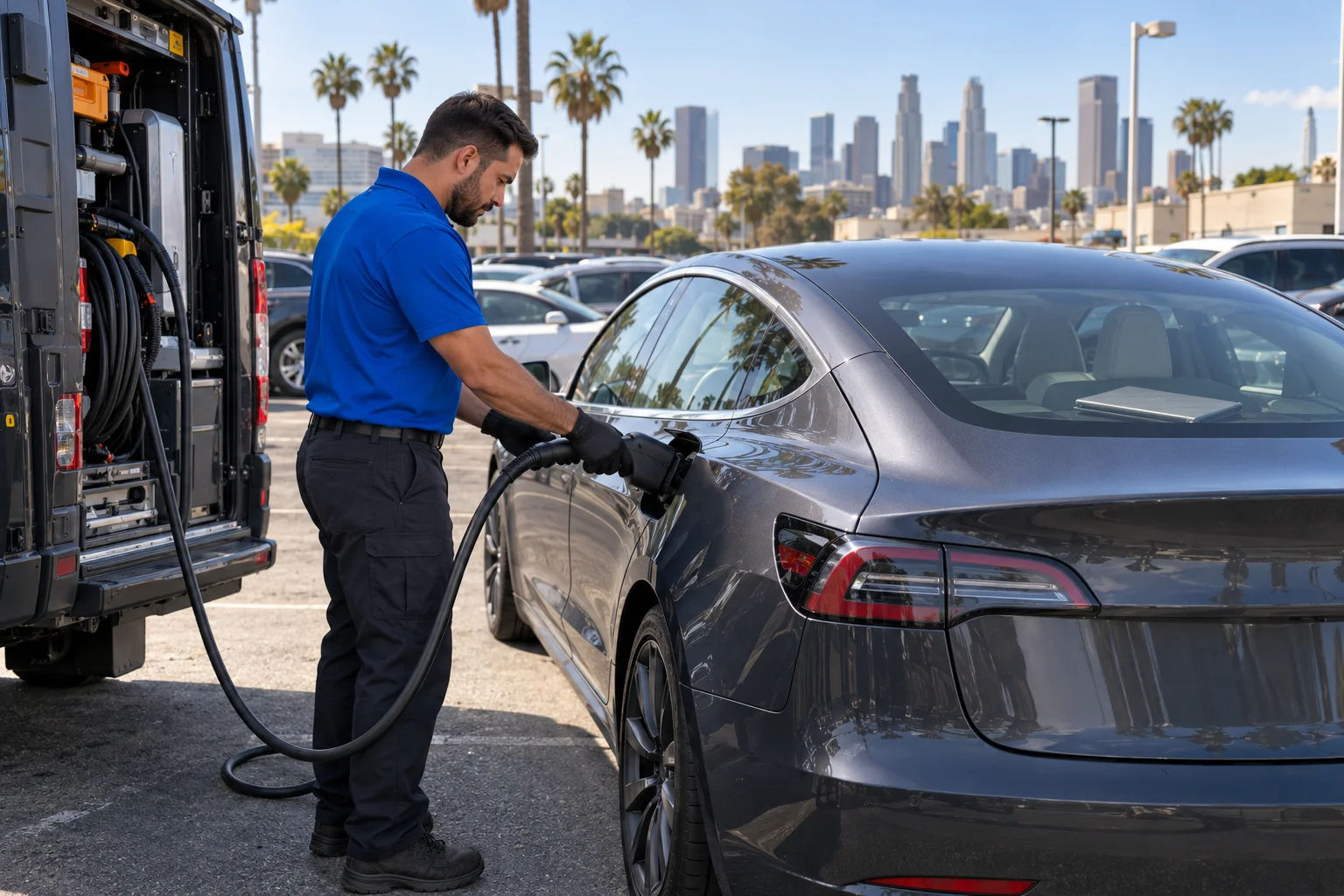
Which Tesla warranty the used-car question concerns
The phrase “Tesla car battery warranty” can point to different parts. Start by identifying which battery and which warranty the seller means.
Tesla’s published warranty overview names several separate limited warranties. These include the Basic Vehicle Limited Warranty and the Battery and Drive Unit Limited Warranty. It also names separate coverage for the supplemental restraint system, body rust, and certain zero-emission vehicles.
The Basic Vehicle Limited Warranty covers four years or 50,000 miles, whichever comes first. That verified term applies to the basic vehicle warranty. It shouldn’t be reused as the battery warranty term.
Tesla’s overview confirms that battery and drive-unit coverage exists. Our approved source doesn’t establish one battery term for every used Tesla. It also doesn’t confirm a universal transfer rule, degradation threshold, or claim result. Those details must come from the warranty supplied with that vehicle.
This distinction matters when comparing listings from Santa Monica to Pomona. A seller might use “battery warranty” loosely. Ask whether the statement concerns the high-voltage battery, drive unit, basic vehicle coverage, or low-voltage battery.
For a closer look at coverage categories, read our guide to what Tesla’s battery warranty actually covers. You can also compare it with the Tesla Basic Limited Warranty.
Tesla says its online warranty page provides general information. The warranty delivered with the vehicle is the authoritative document. That makes the vehicle’s paperwork more important than a dealer headline or marketplace description.
How remaining coverage may follow the vehicle
A used Tesla battery warranty may have remaining coverage, but transfer can’t be confirmed from the general warranty summary alone. The approved source doesn’t establish a single transfer rule for every model, model year, sale type, or vehicle history.
Treat “warranty remaining” as a statement that needs proof. Don’t rely only on an advertisement, window sticker, verbal answer, or screenshot from another vehicle. Ask the seller to identify the exact document supporting the claim.
The strongest answer should connect four items:
- The vehicle you’re buying
- The applicable warranty document
- The vehicle’s current mileage
- Tesla’s confirmation of current coverage
Have the VIN ready when contacting Tesla Service. Ask whether any Battery and Drive Unit Limited Warranty remains for that specific vehicle. Also ask which written warranty controls the answer.
The current Tesla account may offer useful vehicle information. Still, don’t assume every screen proves transfer, eligibility, or claim approval. If the account and the written warranty seem inconsistent, ask Tesla Service for clarification before paying.
A private sale and a dealership sale can present the same verification problem. Neither seller type changes the need for vehicle-specific proof. Charge Pro LA doesn’t sell Teslas, administer Tesla warranties, or decide whether coverage transfers.
The approved claims ledger doesn’t confirm transfer fees, inspection requirements, exclusions, or ownership-registration steps. Ask Tesla Service directly about any of those points. Get the response in writing when possible and retain it with the purchase records.
That approach takes longer than trusting a listing badge. It also gives you something tied to the actual Tesla, not a general statement about the model.
What the battery warranty does not prove
Remaining warranty coverage doesn’t prove that the battery is healthy. It also doesn’t guarantee that Tesla will approve a future repair.
A warranty document sets terms. A vehicle’s condition is a separate buying question. Neither a seller’s range estimate nor a dashboard percentage establishes whether a future battery concern will qualify for coverage.
Our approved sources don’t confirm one Tesla battery degradation threshold for every used vehicle. They also don’t establish approved capacity tests, diagnostic fees, exclusions, or replacement outcomes. Those details shouldn’t be guessed.
Ask the seller for existing service records and battery-related alerts. If an inspection or diagnostic report is offered, confirm who prepared it and what was tested. Then ask Tesla Service whether that information affects warranty status.
Avoid treating these statements as equivalent:
- “The car has warranty time remaining.”
- “The battery passed a recent evaluation.”
- “Tesla will replace the battery.”
- “The vehicle has no battery problems.”
Each statement addresses something different. The first may concern dates or mileage. The second concerns a particular evaluation. The third predicts a claim decision. The fourth makes a broad condition claim.
A used Tesla can also have a low-voltage concern rather than a high-voltage battery concern. Tesla says a vehicle can display an alert when its low-voltage battery needs replacement and direct the owner to schedule service. That alert doesn’t establish anything about high-voltage warranty coverage.
If replacement becomes part of the discussion, review what to expect from a Tesla main battery replacement. Don’t authorize work based on a seller’s warranty interpretation. Confirm the responsible party, written terms, and approval first.
How to check coverage before buying or claiming
Use the same verification process whether you’re shopping or preparing a claim. Begin with the exact vehicle, not general search results for its model year.
First, obtain the VIN and current mileage. Ask for the warranty document associated with that Tesla. Read the battery and drive-unit section, including its limits and exclusions. Don’t fill gaps with terms found on another listing.
Next, review Tesla’s current Vehicle Warranty page. Tesla states that this page is for general knowledge and that the warranty provided with the vehicle controls. Use the page to understand the warranty categories, not to decide an individual claim.
Then contact Tesla Service with specific questions:
- Does this VIN currently show Battery and Drive Unit Limited Warranty coverage?
- Which document controls the vehicle’s coverage?
- Does the ownership change affect the remaining coverage?
- Are any vehicle-specific conditions relevant?
- What records are required before a claim review?
- Does the reported symptom require service diagnosis?
The approved claims ledger doesn’t answer those vehicle-specific questions. Tesla Service must confirm them. If a seller won’t provide the VIN or supporting documents, the battery warranty statement remains unconfirmed.
For an existing owner, save screenshots of alerts and note when the problem appeared. Keep purchase documents, service records, and Tesla communications together. Don’t erase alerts or describe a diagnosis you haven’t received.
For a buyer crossing Los Angeles County to inspect a vehicle, finish the warranty check before the trip when possible. A listing in the San Fernando Valley may be far from a buyer in the South Bay. That distance doesn’t change the warranty, but it can make a second inspection inconvenient.
Charge Pro LA can’t verify ownership, interpret Tesla’s contract, or approve repairs. Our role begins when a stranded driver needs connection to a licensed, independent local EV operator.
Roadside help versus a warranty repair
Roadside assistance and warranty repair solve different immediate problems. A warranty question asks who may be responsible for an eligible repair. Roadside help asks how to handle a vehicle that can’t continue its trip.
A mobile operator can’t decide whether Tesla must cover a battery concern. The operator may help with an appropriate roadside service, depending on the vehicle’s condition and location. Tesla Service remains the source for warranty decisions and repair approval.
If the Tesla is simply out of charge, the situation may call for mobile charging or a tow. Typical rescue charging can add 10 to 20 miles of range during 15 to 30 minutes of Level 2 charging. That is charging time, not an arrival estimate. The operator determines what’s suitable on site.
A Tesla that won’t wake may have a low-voltage issue instead. An operator should identify the roadside need before work begins. Don’t assume every no-start condition means the main battery failed.
For local options, see our Tesla roadside rescue service. Charge Pro LA connects drivers with licensed, insured independent operators. The operator quotes and bills the driver directly. Charge Pro LA doesn’t set the price, perform repairs, or provide a vehicle warranty.
Location also matters. If the vehicle is disabled on a Los Angeles County freeway, California Vehicle Code 21718 generally prohibits stopping there, with an exception for a disabled vehicle when help has been summoned. Metro Freeway Service Patrol assists motorists on designated freeway beats, but its published service list doesn’t include mobile EV charging.
Move away from traffic when you can do so safely. Follow law-enforcement or roadside personnel instructions. Once the immediate roadside problem is handled, take the warranty question to Tesla Service.
When to call us
Call when a used Tesla is stranded, out of charge, or won’t wake and you need a local mobile EV rescue operator. Charge Pro LA can connect drivers across Los Angeles County, but Tesla decides warranty coverage.
Call us at (213) 410-1991 and we’ll connect you with a local EV rescue operator.